Why Your Map Embed Strategy is Likely Triggering a Spam Filter
Why Your Map Embed Strategy is Likely Triggering a Spam Filter in 2026
If you woke up this morning to find your business has vanished from the local map pack, you aren’t alone. In the first half of 2026, we’ve witnessed what many in the industry are calling the “Ranking Cliff.” Businesses that once dominated their local areas for years are suddenly seeing their visibility zeroed out. After auditing dozens of accounts this quarter, the culprit is almost always the same: a legacy approach to google business profile seo that relies on mass-produced, low-quality map embeds.
For years, the “more is better” philosophy ruled the local search landscape. If ten map embeds were good, then ten thousand must be better, right? Wrong. Google’s 2026 algorithm updates have effectively ended the era of “set it and forget it” map blasting. Today, the automated spam filters are more sophisticated than ever, moving away from manual reviews and toward a machine-learning model that identifies manipulation patterns in real-time. As Sterling Sky recently noted, “Spam-fighting as a tactic has become less effective” for manual users because Google’s automated filters are now doing the heavy lifting – often catching legitimate small businesses in the crossfire of their own outdated strategies.
The Death of “Mass Embeds” in 2026
The transition has been brutal. In the past, SEO agencies would use software to blast a business’s Google Maps iframe across thousands of web 2.0 sites, profile pages, and low-tier blogs. The logic was that these embeds created “local signals” and “relevance.” However, the community sentiment across Reddit and the Local Search Forum has shifted dramatically. The consensus is clear: Google has stopped counting these links and started using them as a signal of intent to manipulate search results.
When you flood the internet with thousands of identical map embeds on sites that have no geographic or topical relevance to your business, you aren’t building authority; you are leaving a footprint. In 2026, google business profile seo requires a surgical approach rather than a shotgun blast. If your strategy hasn’t evolved, you are likely triggering a filter that hides your profile from users, even if you aren’t technically “banned.”
The Mechanics of the 2026 Map Spam Filter
To understand why your rankings are tanking, you have to understand how the 2026 filter actually functions. Google’s local algorithm is built on the trifecta of proximity, relevance, and prominence. Historically, map embeds were used to artificially inflate “prominence.”
Today, the algorithm looks at the “contextual environment” of every embed. If a map for a Chicago-based personal injury lawyer is embedded on 500 unrelated Private Blog Network (PBN) sites hosted in Eastern Europe or Southeast Asia, the “relevance” score drops to zero. More importantly, the “unnatural pattern” detector flags the sudden influx of data. Google’s AI now asks: “Why would 500 unrelated blogs suddenly care about a local plumber’s location?” If there is no logical answer, the filter is triggered.
This is precisely Why Your Local Search Ranking Tanked in the 2026 Spam Update. The filter doesn’t just ignore the spam; it devalues the entire profile associated with that map. To see if your profile has been caught in this net, using a google business profile audit tool from SEO Viper Tools is essential. These tools can help you identify where your map is currently living on the web and whether those locations are helping or hurting your local standing.
4 Red Flags That Trigger a Map Embed Penalty
Identifying a penalty or a filter is the first step toward recovery. Based on current data and observations within the SEO community, here are the four primary red flags that are currently triggering map-related ranking drops.
1. PBN Overload and the “BlackHat” Footprint
There was a time when PBNs were the secret weapon of local SEO. However, as users on BlackHatWorld have recently pointed out, “Map embedding is the best technique for improving local SEO, but using a PBN site will cost in Google Penalty.” In 2026, Google’s ability to identify PBNs – even those with unique IPs and hidden WHOIS data – is uncanny. If the majority of your map embeds come from sites with no organic traffic and high outbound link ratios, your google business profile seo strategy is essentially a ticking time bomb.
2. NAP Inconsistency Within the Embed Code
The Name, Address, and Phone number (NAP) must be a 1:1 match with your Google Business Profile. Many businesses change their phone number or move offices but forget to update the thousands of embeds they created years ago. This creates a massive conflict in Google’s data. When the algorithm sees a map for “Joe’s Plumbing” at 123 Main St, but the current GBP says 456 Oak Ave, it loses trust in the entity’s validity. This lack of trust leads to a “soft filter” where your business is suppressed in favor of competitors with consistent data.
3. Irrelevant Hosting and Topical Mismatch
Context is king. If you are a dentist, your map should be embedded on healthcare sites, local community portals, or dental health blogs. If your map is found on a “best recipes” blog or a site dedicated to “crypto news,” it triggers a relevance red flag. Google now weighs the topical authority of the referring page. If the page doesn’t relate to your industry or your city, the embed is viewed as a low-quality backlink attempt. This is one of the 4 Red Flags Your Agency is Padding Local SEO Reports with Junk Data; they might show you “1,000 new embeds,” but if they are on irrelevant sites, they are worse than useless.
4. The “Same Location” Filter and Pin Moving
A fascinating discovery recently shared on Reddit highlights a new aggressive filter: “Google filters out businesses at the same location… if you want your competitors to disappear, just move their pins to the same location.” While this refers to a malicious tactic, it also applies to businesses in co-working spaces or multi-tenant buildings. If your map embeds aren’t clearly differentiated with suite numbers and specific coordinates, the 2026 filter may consolidate your “authority” with other businesses at that address, effectively hiding you from the map pack to avoid “pin clutter.”
Hyperlocal Relevance vs. Global Noise
The solution to the 2026 spam filter isn’t more embeds – it’s better ones. We have moved into the era of “Hyperlocal SEO.” In this environment, five embeds on high-authority, locally relevant sites are worth more than 5,000 bot-generated embeds on foreign domains.
What defines a high-value hyperlocal embed?
- Local News Outlets: A mention and a map embed in a local newspaper’s online edition.
- Chamber of Commerce: Your profile on a local business association site.
- Local Niche Blogs: A neighborhood-specific blog that discusses local events or services.
- Partnership Sites: Sites of other local businesses you actually work with.
When you focus on these signals, you are teaching Google that you are a pillar of your specific community. You can learn How to Build a Local Content Strategy That Doesn’t Feel Like Spam to supplement these embeds. To ensure these high-value signals are being counted correctly, sophisticated local seo ranking tools like those found at https://seovipertools.com can track your progress at a neighborhood level, rather than just a city-wide level.
This shift toward quality is also reflected in how we target keywords. Instead of generic terms, focus on 7 Local Keywords That Actually Drive Phone Calls Instead of Just Clicks to ensure your traffic is high-intent and geographically relevant.
The Technical “Right Way” to Embed in 2026
If you are going to use map embeds as part of your google business profile optimization, you must do it correctly to avoid the spam filters. The technical execution is just as important as the placement.
Use Official Google Maps Share Code
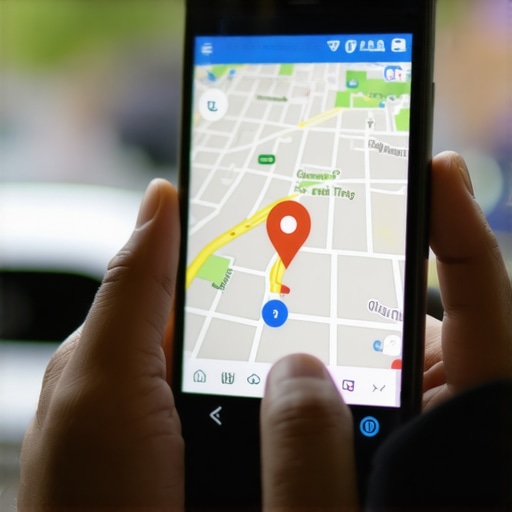
Don’t use third-party “map generators” that wrap your map in layers of unnecessary JavaScript or hidden tracking links. Go directly to Google Maps, find your business, click “Share,” and use the “Embed a map” iframe code. This is the cleanest way to signal to Google that this is an official representation of your business.
Ensure Mobile Responsiveness
A broken or non-responsive map embed on a mobile site is a negative user experience signal. Since Google uses mobile-first indexing, an embed that breaks the layout of a page can indirectly hurt your google business profile seo. Ensure your iframe width is set to 100% so it scales across all devices.
Strategic “Multiple Pin Points”
For service area businesses (SABs), there has been significant YouTube-based research suggesting that embedding maps with multiple pin points – showing a service radius – can help. However, this must be handled with extreme care. If you over-extend your service area beyond what is listed on your GBP, you risk triggering the “proximity” spam filter. If you need professional help navigating this, a google maps ranking service can provide the technical oversight needed to implement these advanced tactics without crossing the line into “spammy” behavior. Using a reputable gmb ranking service ensures that your embeds are placed on vetted, high-quality domains that pass real authority.
Auditing and Recovering from a Filter
If you suspect you have been filtered, don’t panic. Recovery is possible, but it requires a systematic approach. The first step is to stop any automated “link blasts” immediately.
Next, use a google maps rank tracker to correlate your ranking drops with your link-building history. Did your rankings fall 48 hours after a “10,000 map embed” package was delivered? If so, you have identified the cause. You should then attempt to remove or disavow the lowest quality embeds. While the “disavow” tool is primarily for traditional backlinks, cleaning up the digital footprint of your map is crucial for regaining Google’s trust.
Finally, go back to basics. Perform a comprehensive audit. Check your NAP consistency across all major aggregators. Ensure your GBP is fully optimized with high-quality photos, regular posts, and genuine reviews. You can follow The Only Google Business Profile Checklist You Need to See Real Phone Clicks to make sure your foundation is solid before you try to build more “prominence” through embeds.
Conclusion: Building Trust, Not Tricks
In 2026, google business profile seo is no longer about finding the latest “hack” or “loophole.” It is about building a digital presence that reflects the real-world value of your business. Google’s spam filters are designed to reward businesses that provide the best experience for local users. When you clutter the web with low-quality map embeds, you are telling the algorithm that you don’t have enough real-world authority to rank on your own merits.
Stop chasing volume and start chasing relevance. A single map embed on a local news site is worth more than a million embeds on a dead PBN. If you want to rank higher on google maps, you need to play by the new rules of the 2026 algorithm.
Are you unsure if your current strategy is helping or hurting you? Don’t wait for your rankings to hit zero. Audit your profile today using SEO Viper Tools and take control of your local footprint. Whether you need a google business profile audit tool or a comprehensive google maps ranking service, the experts at SEO Viper are here to help you navigate the complexities of modern local SEO. Rank smarter, rank higher, and build a business that lasts.